
Trauma-Informed Practice in Early Years
🌱 Trauma‑Informed Practice in Early Years: Building Safety, Trust and Resilience
Trauma-informed practice has become a central part of early learning and childcare across Scotland. With the updated National Occupational Standards (NOS) and SVQ Early Years Framework placing greater emphasis on understanding and responding to adverse experiences, practitioners are increasingly expected to embed trauma‑sensitive approaches into everyday practice. This reflects a growing recognition of how early adversity shapes children’s development, relationships, and capacity to learn and how supportive, attuned environments can help them thrive.
🌟 Why Trauma‑Informed Practice Matters
Children’s experiences, both positive and challenging, influence how they regulate emotions, respond to stress, and engage with others. Trauma‑informed practice helps practitioners interpret behaviour through a lens of understanding rather than judgement. When we recognise the impact of adverse experiences on:
Brain development
Emotional regulation
Behavioural patterns
Sense of safety and trust
we are better equipped to create environments where children feel secure, valued, and ready to learn.
🧠 Key Principles of Trauma‑Informed Practice
Trauma‑informed approaches align closely with the expectations set out in the new NOS and SVQ frameworks. Core principles include:
Safety and Predictability
Consistent routines, clear expectations, and supported transitions help children feel grounded and reduce anxiety.
Nurture and Co‑Regulation
Children often need adults to help them regulate emotions before they can do so independently. Calm, attuned responses build the foundations for self‑regulation.
Trusting Relationships
Secure relationships are central to healing. Responsive, empathetic interactions help children rebuild trust and develop resilience.
Understanding Behaviour as Communication
Trauma‑informed practitioners look beyond the behaviour to understand the underlying need. This perspective encourages empathy and reduces punitive responses.
Strength‑Based Approaches
Focusing on children’s strengths, interests, and coping strategies supports positive identity formation and builds confidence.
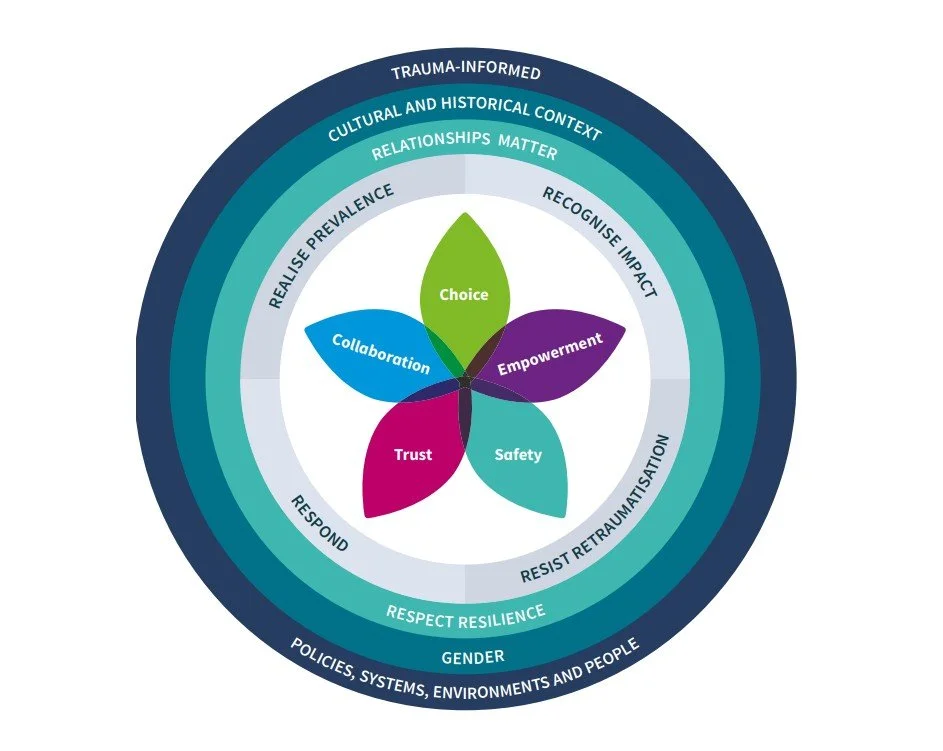
NHS Education for Scotland: Trauma-Informed principles
🔎 Grounded in Scotland’s National “5 R’s”
Scotland’s National Trauma Transformation Programme outlines five core principles that underpin trauma‑informed practice:
Realise the widespread impact of trauma
Recognise the signs and indicators
Respond by integrating trauma‑aware approaches into daily practice
Resist re‑traumatisation through safe, predictable interactions
Resilience — support children and families to build strengths and coping strategies
These principles guide practitioners to create environments where every child feels safe, understood, and supported.
📘 Sector Guidance: SSSC and NES Turas Learn
SSSC – Continuous Professional Learning: The Scottish Social Services Council (SSSC) highlights trauma‑informed practice as a key area of ongoing professional development. Their resources encourage reflective practice, emotional safety, and a deeper understanding of how adverse experiences shape behaviour and learning.
NES Turas Learn – Scottish Trauma Training Plan: Free e-learning modules on NES Turas Learn help practitioners navigate the Scottish Trauma Training Plan, which outlines three core levels of workforce capability:
Trauma‑Informed – baseline awareness for all staff
Trauma‑Skilled – deeper understanding for those in direct support roles
Trauma‑Enhanced – specialist knowledge for practitioners working closely with individuals affected by trauma
For early years practitioners and candidates working towards the SVQ, achieving the Trauma‑Informed level ensures interactions are safe, attuned, and never inadvertently harmful, even when a child’s background is not fully known.
🛡️ Protecting Practitioner Wellbeing: Avoiding Vicarious Trauma
Trauma‑informed work is deeply meaningful, but it can also place an emotional load on educators. Supporting children through distress can lead to secondary traumatic stress or vicarious trauma. A truly trauma‑informed setting extends its culture of nurture to the adult team through:
Reflective supervision that offers emotional holding, not just administrative oversight
Peer‑to‑peer debriefing to process challenging incidents safely
Healthy organisational boundaries that protect work‑life balance and recognise that staff cannot pour from an empty cup
Supporting practitioners is essential for sustaining compassionate, high‑quality care.
🌼 What This Means for Our Practice
Embedding trauma‑informed principles in early years settings means:
Creating emotionally safe, predictable environments
Responding with empathy and curiosity
Using nurture and co‑regulation as everyday tools
Supporting transitions with care and consistency
Reflecting on our own responses, triggers, and wellbeing
Engaging in continuous professional learning through sector approved training
This approach strengthens our ability to meet the needs of all children, especially those who have experienced adversity, while safeguarding the wellbeing of the teams who care for them.
Read Play Scotland’s ‘Why Play belongs in Trauma Informed Practice’ guide here.
💬 Final Thoughts
Trauma‑informed practice is more than a strategy; it is a culture of compassion, understanding, and relational safety. By embedding these principles into daily interactions, organisational routines, and staff support systems, practitioners help children build resilience, develop secure relationships, and experience early years settings as places of stability, joy, and growth.
📚 Additional Resources
Scotland’s National Trauma Transformation Programme - Visit their website for further information
NHS Education for Scotland: Taking a trauma informed lens to your work Sowing Seeds with Dr Nina Koruth.
